ChemMaster and BET Sorptometer
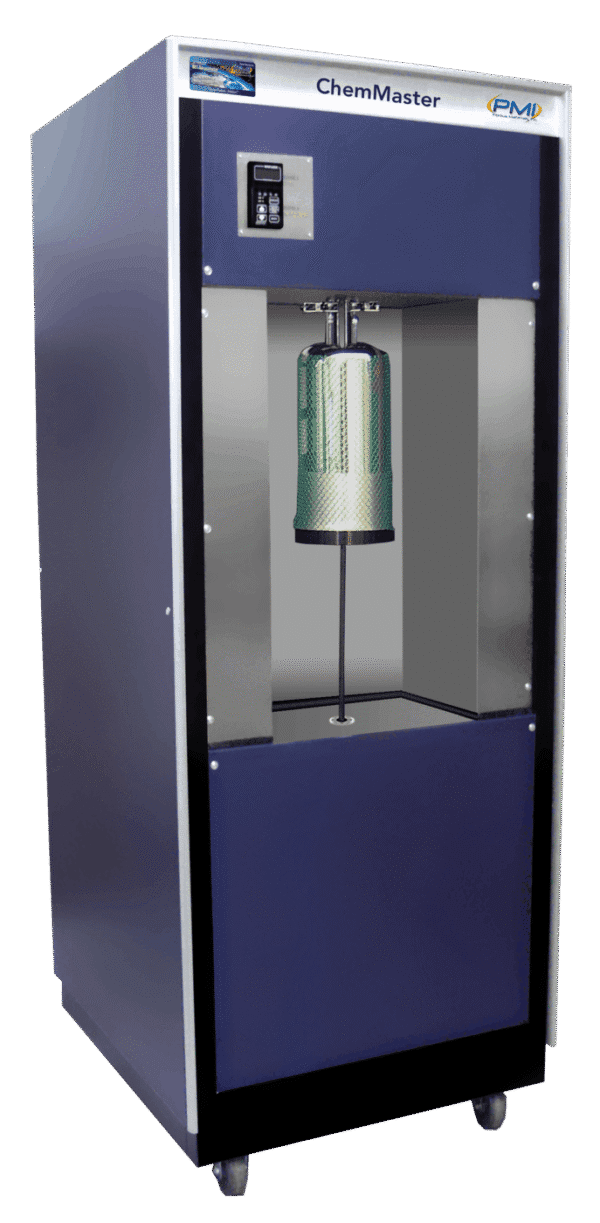
ChemMaster is designed as a versatile tool to investigate and extract information about surface chemistry and surface structure, which are important for the design, production, and application of catalytic materials. PMI's ChemMaster measures the quantity of adsorbed or desorbed molecules, allowing determination of these characteristics.
Overview
ChemMaster is designed as a versatile tool to investigate and extract information about surface chemistry and surface structure, which are important for the design, production, and application of catalytic materials. PMI's ChemMaster measures the quantity of adsorbed or desorbed molecules, allowing determination of these characteristics. All measurements are performed quickly with high repeatability.
Additionally, a BET Sorptometer is provided to extend surface area measurement capability for a wide variety of materials.
PMI's BET Sorptometer is a fully automated volumetric gas sorption analyzer used to accurately measure adsorption and desorption isotherms for the characterization of surface area, pore size distribution, pore volume, and pore structure of microporous and mesoporous materials, as well as adsorption kinetics.
PMI's BET Sorptometer uses the same sample chamber for both micropore and mesopore analysis. The same sample chamber is used for outgassing and testing.
- Automated Control.
- Display of full adsorption and desorption isotherms.
- Graph overlays.
- BJH pore size distribution.
- DFT pore size analysis method.
- αs plot (Alpha-s Plot).
- f-ratio plot.
- Freundlich and Temkin isotherms.
- Langmuir surface area.
- Horvath–Kawazoe method.
- Dubinin–Radushkevich method.
- Dubinin–Astakhov method.
- Micropore size distribution (Horvath–Kawazoe method).
- de Boer t-plot method (for measurement of micropore volume in cc/g and micropore area in m²/g).
- Dead-end and through-pore analysis capability.
Specifications
Request pricing, a technical datasheet, or a consultation with our applications team.
Request a QuoteRelated Products
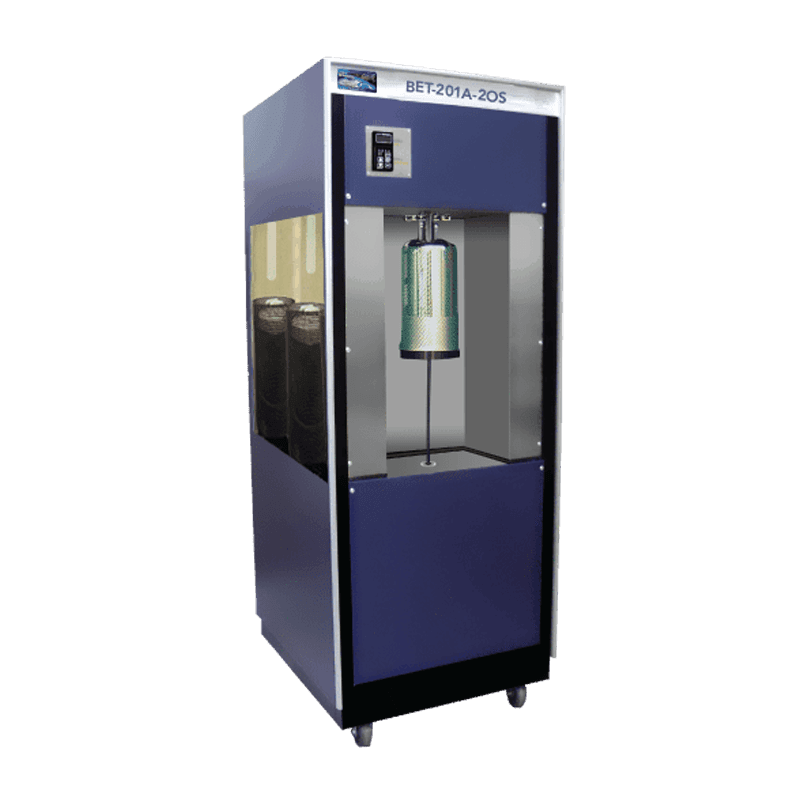
BET-201A-2OS
PMI's BET Sorptometer has a wide range of applications across multiple industries worldwide. Applicable industries include Catalyst and Carbon, Oil & Gas/Geoscience, Battery and Fuel Cells, Chemical, Ceramic, Filtration, Paper, Pharmaceutical/Medical, Powder Metallurgy, and Automotive industries.
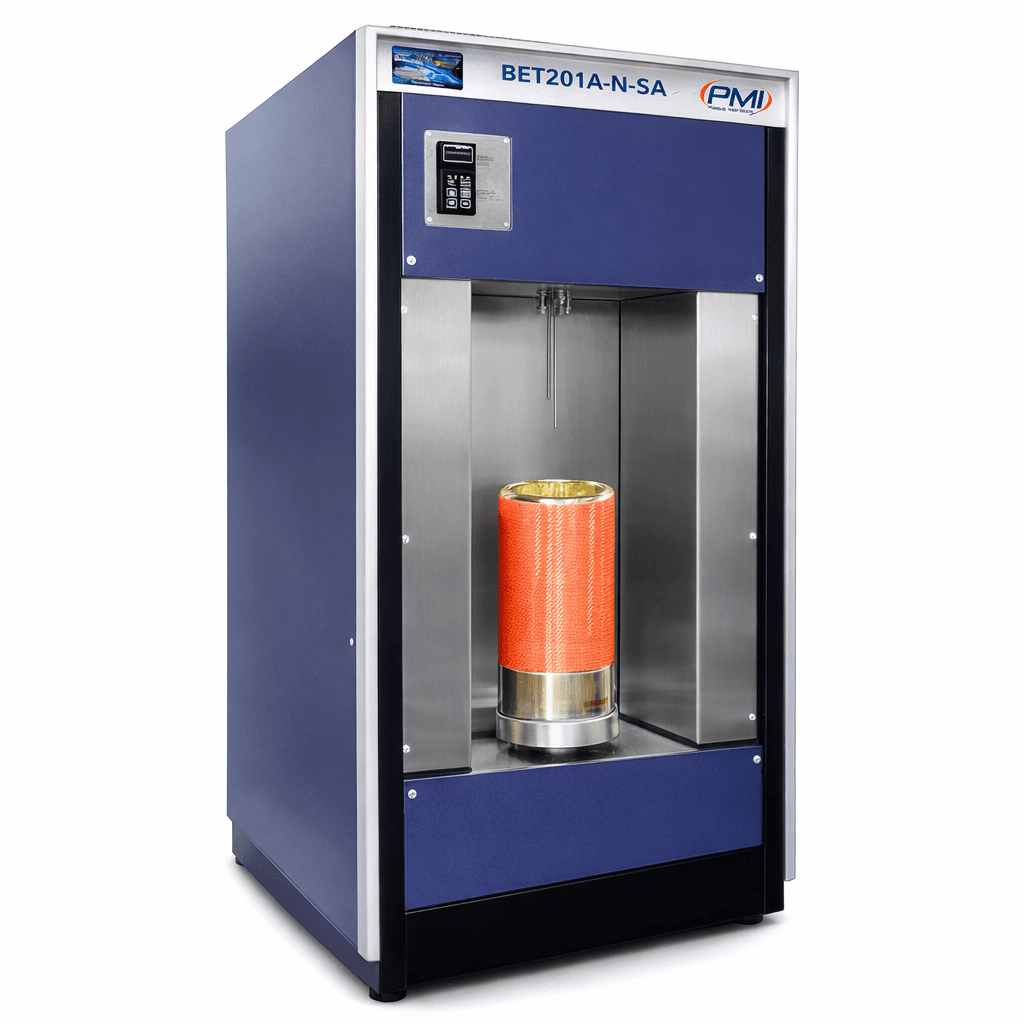
BET-201AN-SA
PMI's BET Sorptometer is a fully automated volumetric gas sorption analyzer used to accurately measure adsorption and desorption isotherms for the characterization of surface area, pore size distribution, pore volume, pore structure of micro- and mesoporous materials, and adsorption kinetics.
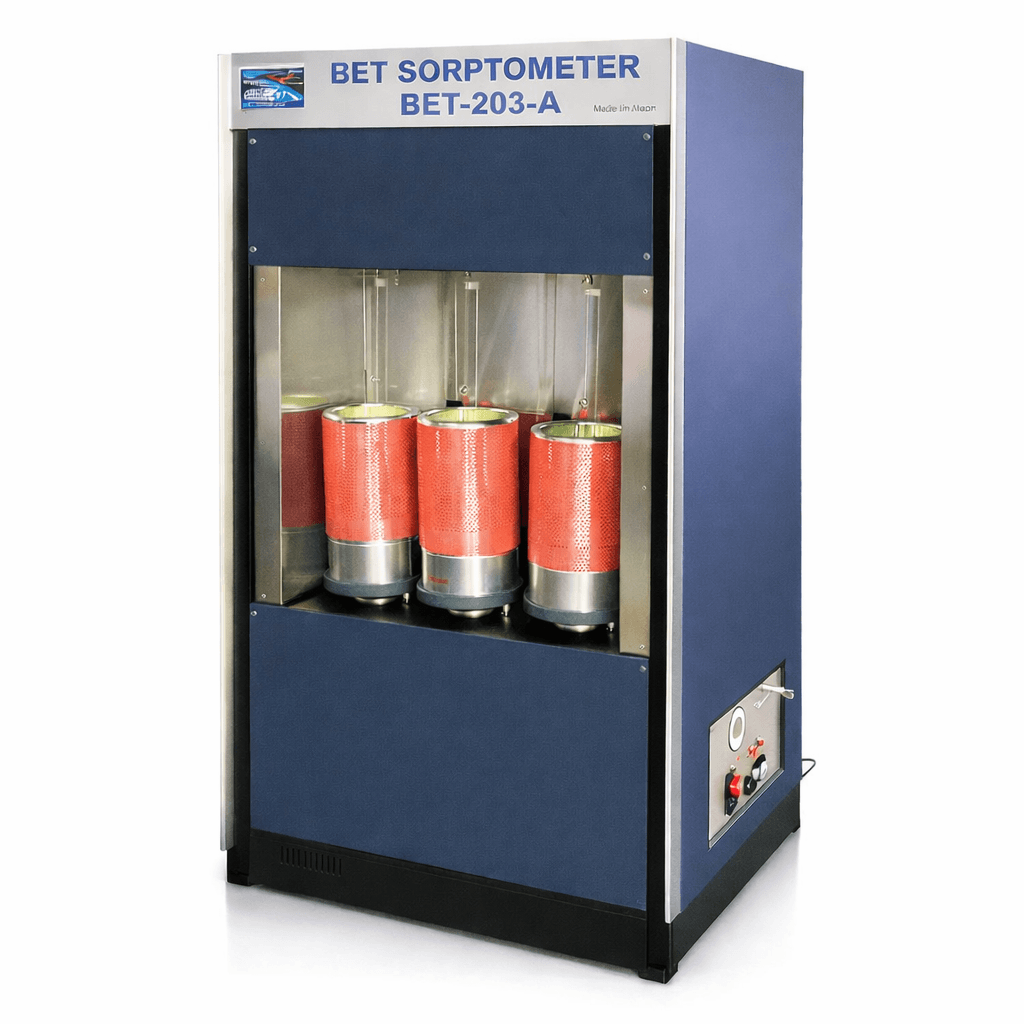
BET-203A
PMI's BET Sorptometer is a fully automated volumetric gas sorption analyzer used to accurately measure adsorption and desorption isotherms for the characterization of surface area, pore size distribution, pore volume, pore structure of micro- and mesoporous materials, and adsorption kinetics.
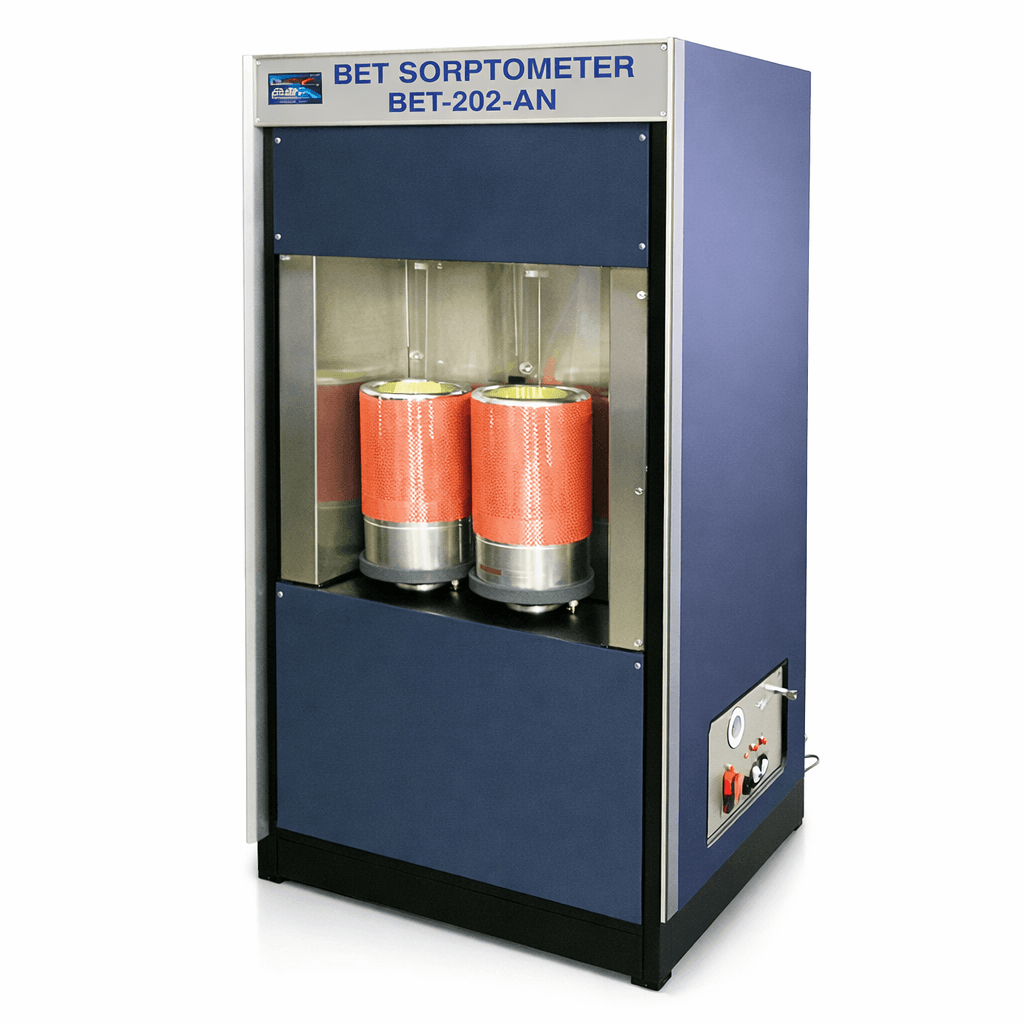
BET-202-AN
PMI's BET Sorptometer is a fully automated volumetric gas sorption analyzer used to accurately measure adsorption and desorption isotherms for the characterization of surface area, pore size distribution, pore volume, pore structure of micro- and mesoporous materials, and adsorption kinetics.